Program Overview

The Molecular and Cellular Biology (MCB) Graduate Program at Dartmouth encompasses the areas of biophysics and structural biology, biotechnology, cell biology, circadian biology, computational biology and genomics, developmental biology, evolutionary biology, genetics, immunology, microbiology, molecular pathogenesis and host-microbe interactions, neurobiology, parasitology, plant molecular biology, proteomics, regulation of gene expression, and signal transduction and cellular metabolism. The MCB program seeks to train highly qualified students for productive careers in research and teaching through the completion of a Ph.D. degree.
The program is interdepartmental, consisting of approximately 160 students and 72 faculty from the Departments of Biological Sciences and Chemistry at Dartmouth College; the Departments of Biochemistry, Genetics, Microbiology and Immunology, Medicine, Physiology, and Pathology at Dartmouth Medical School, and the Thayer School of Engineering. Numerous collaborations exist between MCB members and those in other Ph.D. programs at Dartmouth including the Departments of Computer Sciences, Psychology, Pharmacology/Toxicology, and PEMM. Beginning in 2009, Dartmouth Graduate Studies and Dartmouth's Tuck School of Business offer a new dual degree program which allows Dartmouth Ph.D. students to obtain an accelerated MBA degree.
In addition, the M.D./Ph.D. Program at Dartmouth Medical School provides research opportunities for students interested in the scientific basis of clinical medicine.

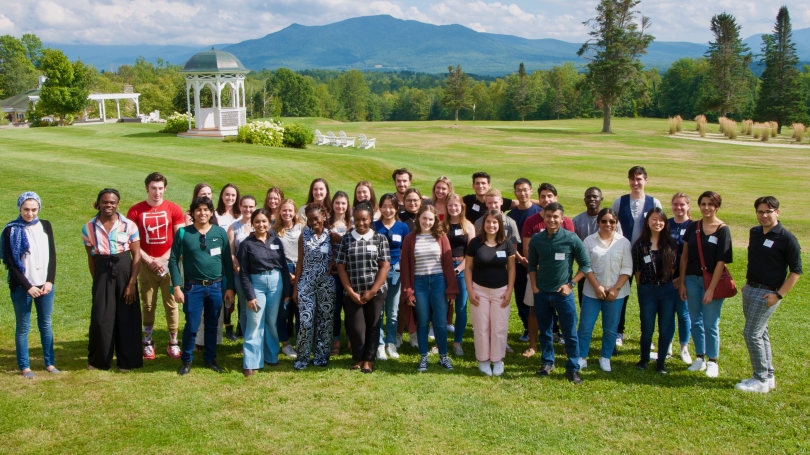
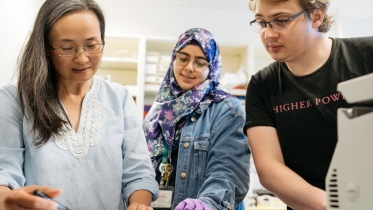
Overall, there is a thriving community of students engaged in graduate education and research, and interaction among students in all the graduate programs is common and encouraged. Dartmouth, one of the Ivy League institutions, has a long-standing tradition of close student-faculty ties; a tradition that is heartily endorsed by the MCB program.Twenty-five to thirty students matriculate each year. Each student works closely with a thesis advisor and has the opportunity to interact daily with other members of the program. Research rotations during the first year provide students the opportunity to explore diverse research interests and then make an informed decision when selecting a thesis lab.
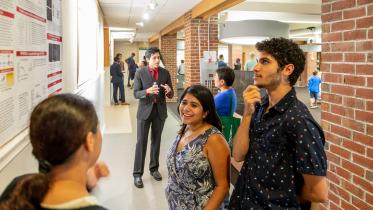
MCB program members participate in several active seminar series with speakers drawn from a host of nationally and internationally recognized research institutions. Graduate student "research in progress" seminars are held on a weekly basis providing both an opportunity to learn about each other's research and to obtain feedback from faculty and students. Informal interactions among program students and faculty take place during weekly get-togethers, Journal Clubs and also during program-sponsored annual retreats.
Student Stipend
Each student enrolled in the program receives a Dartmouth Fellowship that provides a full-tuition scholarship, a prepaid health insurance plan, and a student stipend. The stipend for incoming student sin 2009-10 will be $25,500 and $26,000 for those who have completed their qualifying exams.
Living Costs
Dartmouth assists graduate students in arranging for appropriate housing, either in College facilities or in privately owned accommodations in the Hanover area. College-owned apartments are available at various rents for graduate students.